Plan your election
Estimate eligible care costs for the year and make your election through your employer’s enrollment process. DependentCares imports that election; you do not enroll again here.
 Powered by DependentCares
Advantage Capital · 2027 benefits
Your dependent care benefit brings your contributions, claims, and reimbursements together.

A little preparation today.
More confidence in the year ahead.
The benefit, in plain language
A dependent care flexible spending account lets eligible employees set aside money through payroll for qualifying care that allows them—and a spouse, when applicable—to work or look for work.
When the requirements are met, that money can receive favorable tax treatment. Your election, eligible expenses, and available contributions work together to determine what can be reimbursed.
IRS guidance: dependent care assistanceEstimate eligible care costs for the year and make your election through your employer’s enrollment process. DependentCares imports that election; you do not enroll again here.
Your employer’s payroll system handles deductions. DependentCares imports actual contributions. Keep itemized documentation of the care provided.
Upload your documentation after care is provided. Follow its review status in your secure employee portal.
Approved claims are reimbursed from available funds. An unpaid approved amount can wait for later contributions.
The Caregiver Network
In developmentThe DependentCares Caregiver Network is being built so participating daycare and aftercare providers can submit bills and supporting documents directly for linked parents in an employer’s DCA plan.
Parents can follow claim status in their own portal. Approved claims are reimbursed in installments as actual contributions become available.
Explore the Caregiver NetworkStart with the right expenses
Eligibility depends on the person receiving care, the provider, and why the care is needed.
Day care, preschool, and before- or after-school care may qualify for a qualifying child under age 13.
Everyday supportEligible day camps may qualify when they enable work. Overnight camps and school tuition generally do not.
A plan for busy seasonsCare for a qualifying spouse or dependent who cannot care for themselves may qualify. Residence and other IRS tests apply.
Beyond child careProvider restrictions and additional eligibility rules apply. Confirm unusual expenses before you elect or submit a claim.
Review IRS eligibility guidanceMake it personal
Choose an illustrative tax rate to explore potential savings. The math is simple. Your actual tax situation may be more specific.
$3,750 if married filing separately. Household, earned-income, and other limits can reduce what you may exclude. Advantage Capital’s adopted annual plan limit is $7,500.
Source: IRS Publication 15-BChoose an example combined marginal income and payroll tax rate. These five rates are illustrations, not tax brackets or personalized advice. Your actual rate may differ.
$5,000 × 30% estimated tax rate
This calculator does not establish eligibility or an election. It does not calculate the dependent care tax credit, income limits, a spouse’s benefits, state differences, or nondiscrimination adjustments. Confirm the adopted plan and household limits before enrolling.
Employee / parent portal
See your contributions, available balance, and claim status together. Submit receipts and follow approved claims as reimbursements are paid from available contributions.
Sign in to your employee portal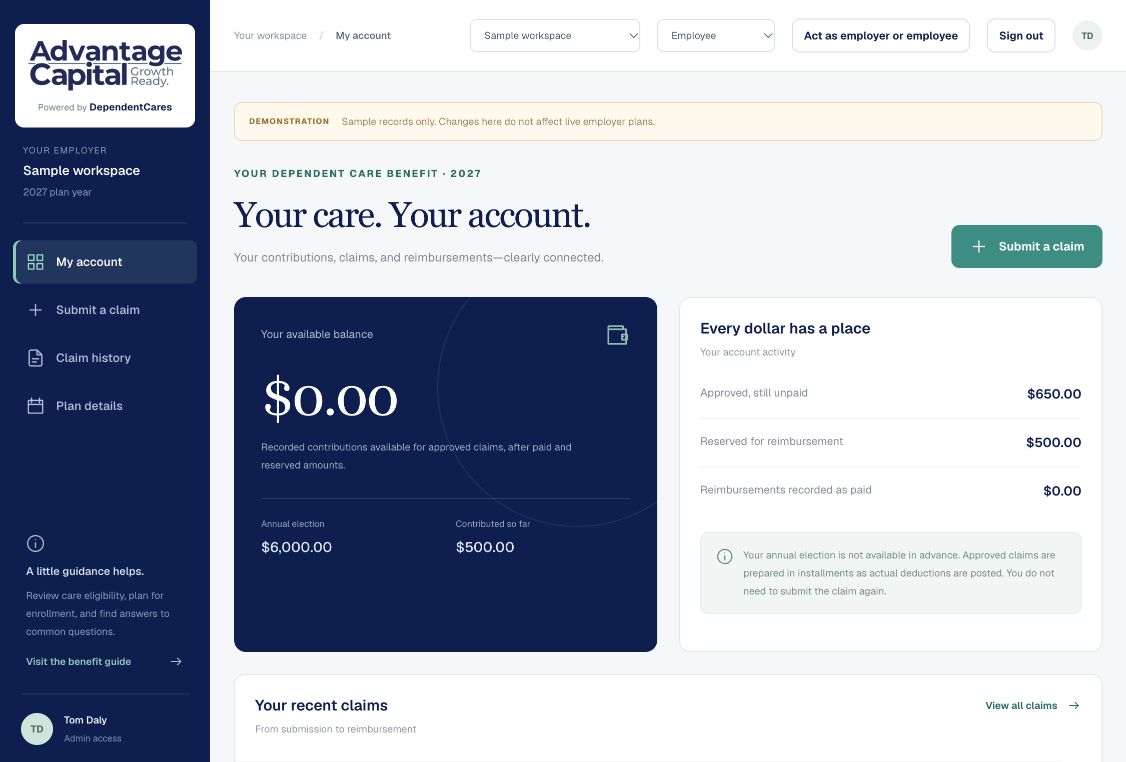
Actual parent account view in the administrator’s sample workspace. All participant and financial records shown are demonstration data. Branding and plan details vary by employer.
A good year begins with a good plan
You do not need every detail today. Start with the care you expect to use.
Consider school schedules, summer care, changing providers, and any months you may not need care. Elect thoughtfully: unused amounts may be forfeited under the plan’s rules.
Coordinate with your spouse’s benefits, when applicable. The federal limit is not a separate allowance for each spouse, and earned-income rules may reduce your eligible amount.
Keep provider details and itemized documentation handy. You may also need provider tax information for your own return. Avoid sharing sensitive tax identifiers through ordinary email.
A few good questions
For a decision about your own situation, contact Tom Daly or the plan administrator. tom@dependentcares.com
Plain-language answers about eligibility, eligible expenses, contributions, and deadlines. Opens in a new tab.
Enrollment is scheduled from Oct 27, 2026 through Dec 18, 2026. The plan begins Jan 1, 2027. Make your election through your employer’s enrollment process. DependentCares imports your election and actual deductions to administer claims.
No. Reimbursements are limited by the funds available in your account and the approved plan rules. Your annual election is the amount you plan to contribute, not a balance already deposited.
You may receive a partial reimbursement. The approved unpaid portion can remain pending as later contributions become available. Your portal keeps the approved, reserved, and paid amounts separate.
Keep itemized evidence identifying the care provider, person receiving care, service dates, and expense amount. A payment alone may not establish the services provided. The administrator may request more information before approving a claim.
Dependent care accounts generally follow use-or-lose rules. Any grace period and the deadline to submit claims depend on the adopted plan. Those dates will be communicated once confirmed; do not assume unused funds roll over.
Changes require a permitted event and must follow the plan’s rules. Contact HR when your situation changes. A request does not change your payroll election until it has been reviewed and implemented.
The same expense cannot receive both benefits. Dependent care assistance can also affect the amount available for the credit. A tax adviser can help you compare the options for your household.
IRS Publication 503Your next step
Make your 2027 election through Advantage Capital’s enrollment site. You can still use your DependentCares employee account to view contributions and manage claims.
Enrollment: Oct 27, 2026 through Dec 18, 2026, inclusive (Central time).Go to my DependentCares account